Section 01 / What I Thought It Was
I thought I'd be fixing leaks. I spent a month in a trench.
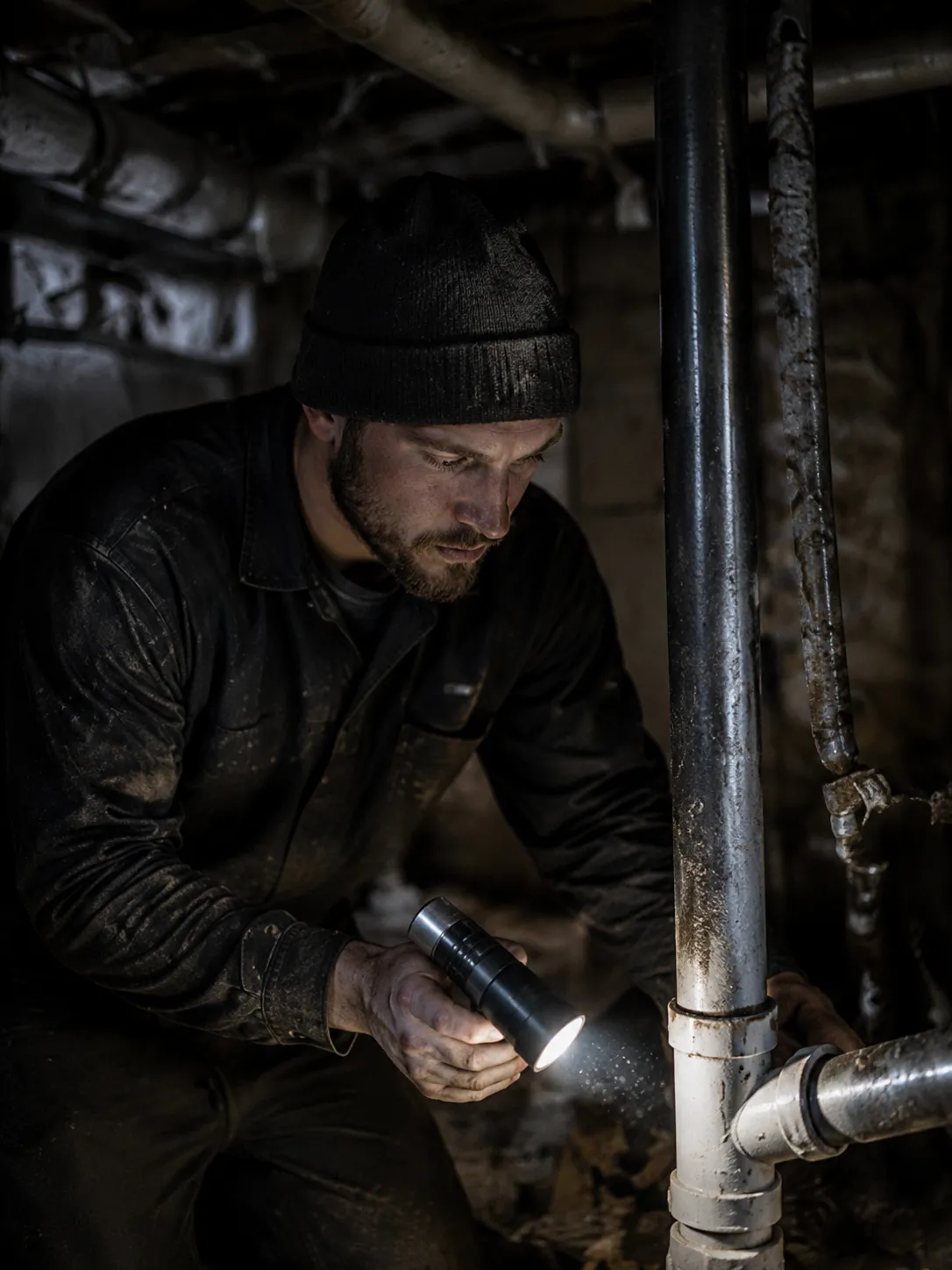
Sam, 19, plumbing apprentice, Chicago. First month was excavation prep and observation. Commercial plumbing in a 40-story building means miles of pipe and drainage systems that start below the street. Nothing about the first weeks looked like what I expected. I learned to read blueprints before I touched a fitting.
Section 02 / What Surprised Me
Licensing. In Illinois, you can't work solo without a journeyman plumber's license. That's five years of documented hours and a state exam. I knew trades had requirements — I didn't know the path was that structured. There's a sequence: apprentice hours, journeyman exam, master license. Skip a step and you can't legally turn a valve on your own.
Section 03 / The Cost of Failure
The water doesn't care what shift it is.
Three in the morning in January. A main line burst in a hospital. We were there within the hour. The pipe had been patched wrong by a previous contractor — a compression fitting not rated for the pressure. Someone signed off on it. That signature cost three floors of ceiling damage. In plumbing, the work you do wrong doesn't announce itself immediately. It waits.
Section 04 / What I Spent
Section 05 / The Lesson at 19
Protect your knees. You only get one pair.
You'll kneel more than you think. Crawling under concrete slabs, working under fixtures, positioning inside mechanical rooms designed by someone who never held a pipe wrench. Knee pads aren't a suggestion — they're part of the job. Buy the professional grade ones. The $25 foam pads are gone in a week.
Buy the professional grade ones. The $25 foam pads are gone in a week.