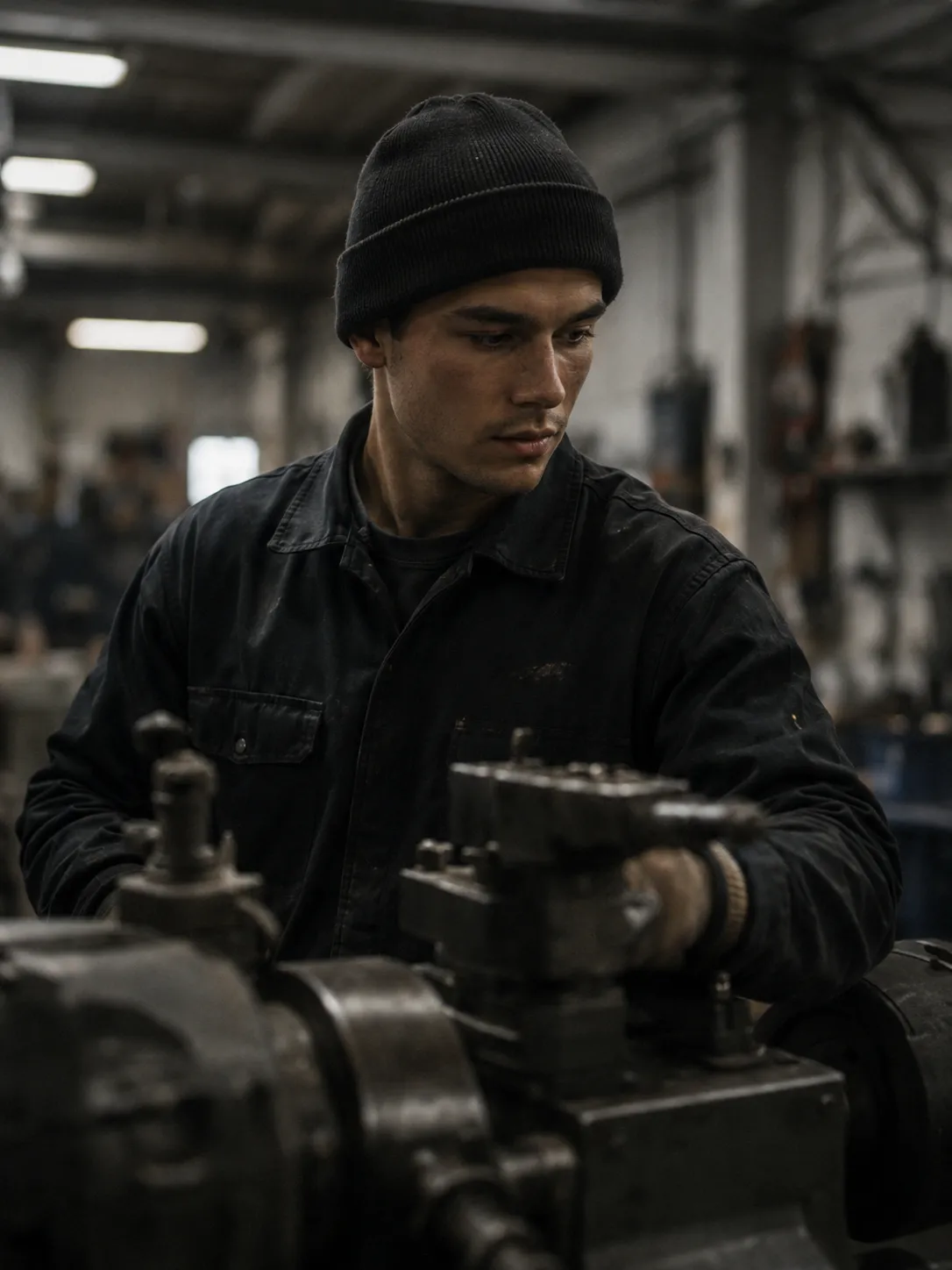
Section 01 / What I Thought It Was
I thought factories were dying. I walked into one running on robotics.
Parker, 21, industrial machinery mechanic apprentice, Detroit. I'd grown up hearing about the collapse of manufacturing. The first plant I walked into had six-axis robotic arms running in coordinated cells, vision systems checking tolerances in real time, and a floor supervisor who spent half his day reading PLC data. The machines weren't replacing the workers — they were changing what the workers needed to know. The old job was gone. The new one paid more.
Section 02 / What Surprised Me
Shift work. Days, afternoons, nights — rotating every three weeks. Your body adjusts slower than the schedule changes. The afternoon shift is quiet and you can focus. Night shift pays a differential but the factory floor at 3am has a weight to it that nobody warns you about. You get used to it. You also never fully get used to it. The people who last long in this trade usually find a shift that fits their life and stay there.
Section 03 / The Cost of Failure
The machine doesn't tell you what's wrong. You have to ask it the right questions.
A robot cell started skipping a step in its sequence. No fault code. No alarm. Just a slightly off output that quality control caught. The journeyman spent two hours asking the machine questions — checking encoder feedback, reviewing PLC logic, testing sensor response times. The answer was a proximity sensor drifting out of spec. Nothing on the HMI flagged it. If you wait for the machine to tell you, you're already behind.
Section 04 / What I Spent
Section 05 / The Lesson at 21
Learn the machine's normal before you try to fix its broken.
Every machine has a sound, a rhythm, a set of baseline numbers that tell you it's healthy. Vibration signature, cycle time, temperature range, current draw. Before you can diagnose anything, you need to know what normal looks like. Spend your first months watching and listening. Take notes. The journeymen who can diagnose a fault in ten minutes have ten years of baseline data in their head. You're building that database now.
Spend your first months watching and listening. You're building that database now.